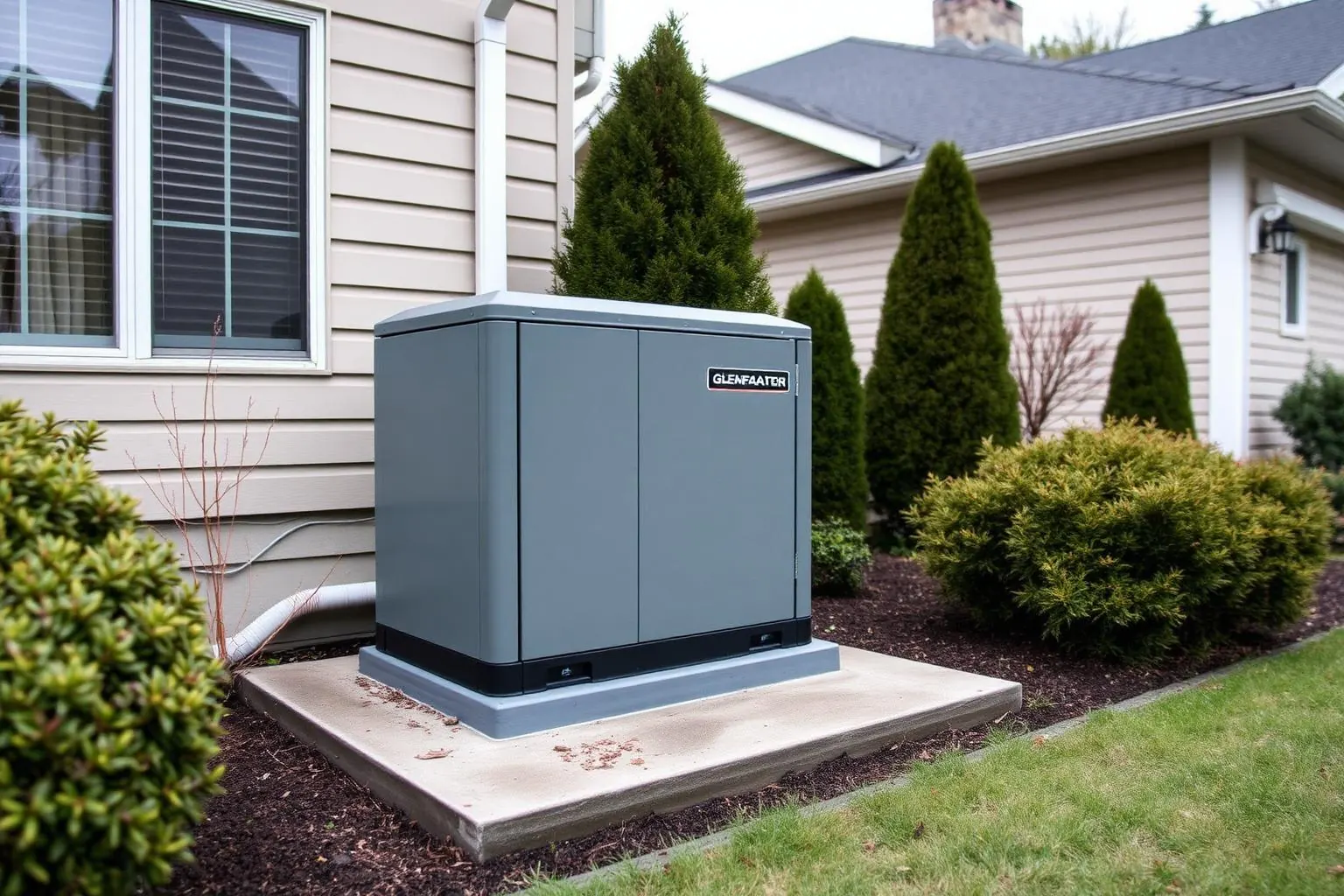
Generator Installation in Bellingham, WA
If you have lived in Whatcom County through a few winters, you know the drill. A windstorm rolls through, trees come down on lines, and parts of the county go dark, sometimes for hours, sometimes longer. When the power is out, the furnace fan stops, the well pump stops, the fridge starts warming up, and you find out fast which parts of your house you actually depend on.
Bellingham Electrical installs backup power systems for homes across Bellingham and Whatcom County, from a simple interlock kit for a portable generator to a standby generator with an automatic transfer switch. We will walk you through the options honestly, size the system to what you actually need, and pull the permit so the work is inspected and done right.
Call or text (360) 218-4499 or book online.
Licensed, bonded, and insured. WA L&I contractor registration CASCACH748MH.
Licensed electrical work, led by Eric Chan, WA electrical administrator AD CHAN*E*743C7.
$129 service call, credited toward the work if you hire us.
On time or it's on us. Miss the window we gave you and the $129 service call is free.
Your backup power options, honestly explained
There are three main ways to wire a home for backup power. Each one is a legitimate choice at a different budget. Here is the plain version of what each gets you. If you are still weighing engine against storage, we compared generator versus whole home battery on the numbers that apply in Washington.
Portable generator with an interlock kit (the budget path)
An interlock kit is a mechanical slider installed on your electrical panel. It makes it physically impossible to have your generator breaker and your main breaker on at the same time. You roll out your portable generator, plug it into an inlet we install on the outside of the house, flip the interlock, and choose which circuits to power by turning breakers on and off.
- Lowest installed cost of the three options
- You supply and maintain the portable generator
- Fully manual: you start the generator, plug in, and switch over yourself
- Power is limited to what your portable generator can produce, so you run essentials, not everything
For a lot of households, this is the right answer. It covers the fridge, the furnace fan, some lights, and the well pump for a fraction of the cost of a standby system.
Manual transfer switch
A manual transfer switch is a small dedicated panel installed next to your main panel, pre-wired to a fixed set of circuits you choose in advance, such as the furnace, fridge, well pump, and key lights. When the power goes out, you connect the generator and flip the switch. Only those pre-selected circuits are fed.
- More cost than an interlock, less than standby
- Simpler to operate during an outage because the essential circuits are already picked
- Still manual and still limited by your portable generator's output
Standby generator with automatic transfer switch
A standby generator is a permanently installed unit outside your home, typically fueled by natural gas or propane. An automatic transfer switch senses the outage, starts the generator, and switches your house over without you doing anything. When utility power returns, it switches back and shuts the generator down.
- Highest cost, highest convenience
- Works whether you are home or not, which matters for freezers, sump pumps, and medical equipment
- Can be sized for essential circuits or, with a large enough unit, most of the home
One honest note on standby installs: the fuel side of the project, meaning the natural gas or propane line to the generator, is gas-fitting work performed by a licensed gas contractor, not by us. We handle all of the electrical work and coordinate with the gas side so the project comes together in the right order. Plan for that coordination in the project timeline.
Sizing: essentials or the whole home
The most common mistake in generator projects is buying the generator first and thinking about circuits second. We do it in the other order.
Essentials-only. Furnace or heat source fan, refrigerator, freezer, well pump if you have one, a few lights and outlets, internet gear. This is what most portable-generator setups and smaller standby units are sized for, and for most outages it is all you miss.
Whole-home. Everything runs as if the grid never blinked, including electric ranges, dryers, heat pumps, and EV charging if sized for them. This takes a substantially larger standby unit and a hard look at your panel and service capacity.
We will do the load math with you before anything is bought, so the system you pay for matches the outage you are actually preparing for. A properly sized system keeps the circuits it was sized for running; an undersized one trips or stalls under load, which is exactly what you do not want to discover mid-storm. If your panel is old or already full, backup power is often the moment to deal with it; see our electrical panel upgrades page for what a service change involves. The method we use to get from a house to a wattage number is written up in full on how to size a generator for a Pacific Northwest home.
Permits and L&I inspection
Generator wiring in Washington requires an electrical permit, and the work gets inspected by Washington State Labor and Industries. That is not red tape to dodge; it is a second set of trained eyes on equipment that ties directly into your home's electrical service.
We pull the permit, do the installation to code, and meet the inspection. You end up with a documented, inspected installation, which also matters for your homeowner's insurance and for resale.
Why backfeeding is the one shortcut that can hurt someone
You may have heard of powering a house by plugging a generator into a dryer outlet with a homemade double-male cord. Do not do this. It is called backfeeding, and it is dangerous in two directions.
Inside the house, nothing prevents the generator and the utility from feeding the same wiring, which can destroy equipment and start fires when the grid comes back. Outside the house, backfeeding can push power out through your meter onto the utility lines, energizing wires that line crews believe are dead. That puts the people working to restore your neighborhood's power at risk of electrocution.
Every option we install, interlock kit, manual transfer switch, or automatic transfer switch, exists to make that scenario impossible by mechanically separating generator power from utility power. That is the whole point of doing this right.
What a generator project looks like with us
- 1
Talk through your outage plan. What has to stay on, how long outages tend to run for you, what your budget is.
- 2
Site and load assessment. We look at your panel, your service, and where the inlet or standby unit would go, and we do the sizing math.
- 3
A straight quote. You get options in plain language with real prices, not a hard sell toward the most expensive system.
- 4
Permitted installation. We pull the electrical permit, install, and coordinate the gas contractor if the project is a standby unit.
- 5
L&I inspection and walkthrough. The work is inspected, then we show you exactly how to use the system before we leave.
The site visit and assessment run on our flat $129 service call, credited toward the project if you hire us for the work. What we are planning against is not a guess either: the filed Whatcom County power outage data shows how long local outages actually run.
FAQ
Want the lights on during the next windstorm? Start with a site visit.
Flat $129 assessment, credited toward the project. Honest options from a licensed Bellingham electrician, from interlock kits to standby systems.
- Call or text (360) 218-4499
- Book Online
Cascade Crest Home Services LLC dba Bellingham Electrical. WA L&I license CASCACH748MH. Bellingham Electrical, 8125 Birch Bay Square St, Unit 205, Blaine, WA 98230, (360) 218-4499